
Employee engagement analytics is redefining how enterprises connect and engage with their workforces. For Internal Communications, HR, and IT teams at complex organizations, platform analytics aren't just a reporting tool. It’s a way to unlock actionable insights and accelerate business priorities.
But what are the metrics that really matter, and how can you access them? That’s what we’ll unpick in this employee engagement analytics deep-dive.
But first…
What is employee engagement analytics?
Employee engagement analytics involves the collection and analysis of data to understand how engaged employees are at work. It focuses on employee attitudes, behavior, and feedback.
This analysis helps identify patterns and trends in employee engagement. By doing so, organizations can take targeted actions to improve workplace satisfaction.
Key elements of employee engagement analytics include survey data, feedback loops, and employee interactions. These work together to provide a comprehensive view of engagement levels.
Why do employee engagement analytics matter?
Today’s enterprise leaders face pressure from every direction: The rise of AI, hybrid work, talent shortages, and market disruption. Meanwhile, Gallup research shows employee disengagement now costs the global economy $8.8 trillion annually. Gallup also states that engaged employees help their businesses achieve:
- 18% higher productivity
- 21% less staff turnover
- 10% increase in customer loyalty.
Without deep insight into how employees communicate, collaborate, and feel, organizations struggle to engage their employees, and therefore struggle to remain competitive.
At Unily, enterprises we speak to regularly highlight the importance of actionable analytics. They know that with the external challenges mentioned above, being able to react at speed is key – and insights can help unlock this.
Essential metrics for enterprise employee engagement analytics
By looking at a combination of quantitative and qualitative metrics, you can get both clarity and actionable direction. Key performance indicators you should be looking at include the following:
|
Metric |
Description |
Usage |
|
Employee Net Promoter Score (eNPS) |
Advocacy and loyalty gauge through regular polling |
Surface culture risks for early intervention |
|
Employee Satisfaction Index (ESI) |
Role and environment happiness |
Focus improvement initiatives |
|
Turnover and absenteeism rates |
Employee stability and presence |
Targeted retention, engagement and wellness programs |
|
Survey response rates |
Quality of feedback culture and comms effectiveness |
Helps refine comms strategy |
|
Productivity / performance metrics |
Output and goal achievement |
Ties employee engagement to strategic objectives |
Best practices: Maximizing the ROI of intranet analytics
Our work with C-suite leaders and enterprise HR teams over the last two decades has surfaced several best practices that we know builds lasting value from intranet analytics. Here are some things that should form part of your plan.
Align intranet analytics to strategic goals
Define clear, measurable objectives in collaboration with business leaders. This could include reducing staff turnover by a certain percentage, boosting satisfaction in a specific region, or improving the speed of decision-making. Also ensure you tie employee engagement analytics directly to business outcomes – this will give you the C-Suite buy-in and budget prioritization which can be so important.
Collect and contextualize data consistently
Utilize a blend of annual engagement surveys, pulse surveys, and exit interviews to track both broad trends and real-time shifts. Supplement these with digital analytics, like content usage and workflow trends, for more comprehensive workplace engagement insights.
Communicate transparently
Foster a feedback culture where leadership listens and acts. Many of our customers highlight that a transparent approach accelerates cultural transformation. When collecting employee feedback, guarantee anonymity and communicate clearly how responses are used. This builds deeper organizational trust.
Contextualize with external benchmarks
Compare results against industry and sector benchmarks to contextualize internal data, and identify your unique strengths or vulnerabilities.
Invest in scalable, integrated technology
When choosing an employee experience platform, look for one which offers advanced analytics and the ability to scale with your needs. In addition, look for robust integrations with your existing tech stack – enabling engagement metrics to be aligned with broader business strategies.
Integrated employee engagement analytics: What to look for
As an award-winning employee experience platform, we know that enterprises need more than just raw numbers on a sheet. Large, complex organizations have specific requirements, and need a unified solution that actively impacts business results.
Here are some of the things you should be on the lookout for.
Advanced filtering capabilities
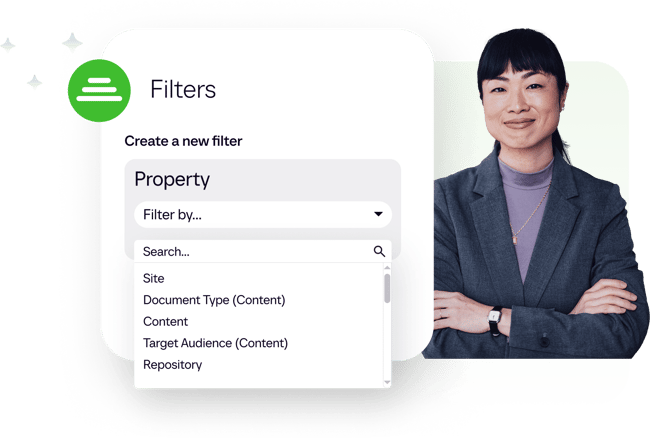
The ability to apply granular filters across all dashboards – for example by audience segment, document type, repository, and more – can dramatically cut time spent on repetitive reporting. It also means different functions get the analytics they need, from content creators to the C-suite.
 Holistic engagement snapshots
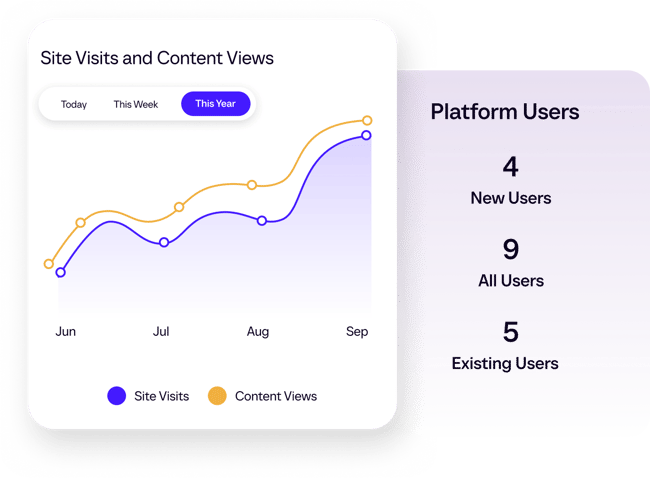
Granularity is important, but sometimes you also need instant visibility into platform-wide engagement metrics. Examples include:
- Total site visits & unique visitors
- Content views and active content users
- Social interactions (reactions, comments, shares, follows)
- User actions (downloads, follows, offline saves)
Comms teams frequently report that this single view of workplace engagement insights enables them to react faster and target communications more effectively.
Platform usage insights
Being able to get session breakdowns by device (desktop vs mobile), and analyze dwell time to pinpoint content effectiveness, allows EX teams to constantly refine and optimize their outputs.
CSV exportability
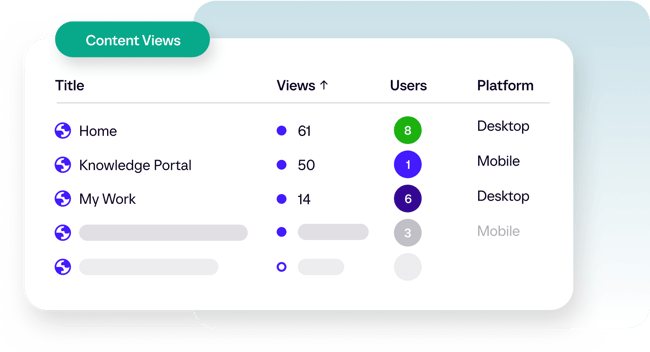
Some platforms, such as Unily’s, provide downloadable tables that integrate seamlessly into BI and reporting tools. This capability is often essential for board-level analysis and longitudinal reporting.
Topic trends and insights
Things like topic tagging and visualized publishing patterns allow teams to see which themes generate greater interest. This in turn allows you to make data-driven decisions, so enterprise comms moves well beyond guesswork.

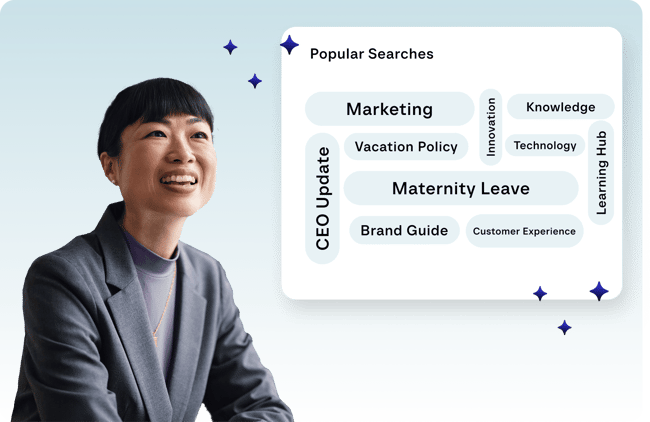
Search behavior analytics
Look for easy ways to tack what employees are searching for across the EXP. This includes simple search terms, to more specific document type refiners. These can then be used to understand what the learning needs and information gaps are for workers.
Sentiment overview
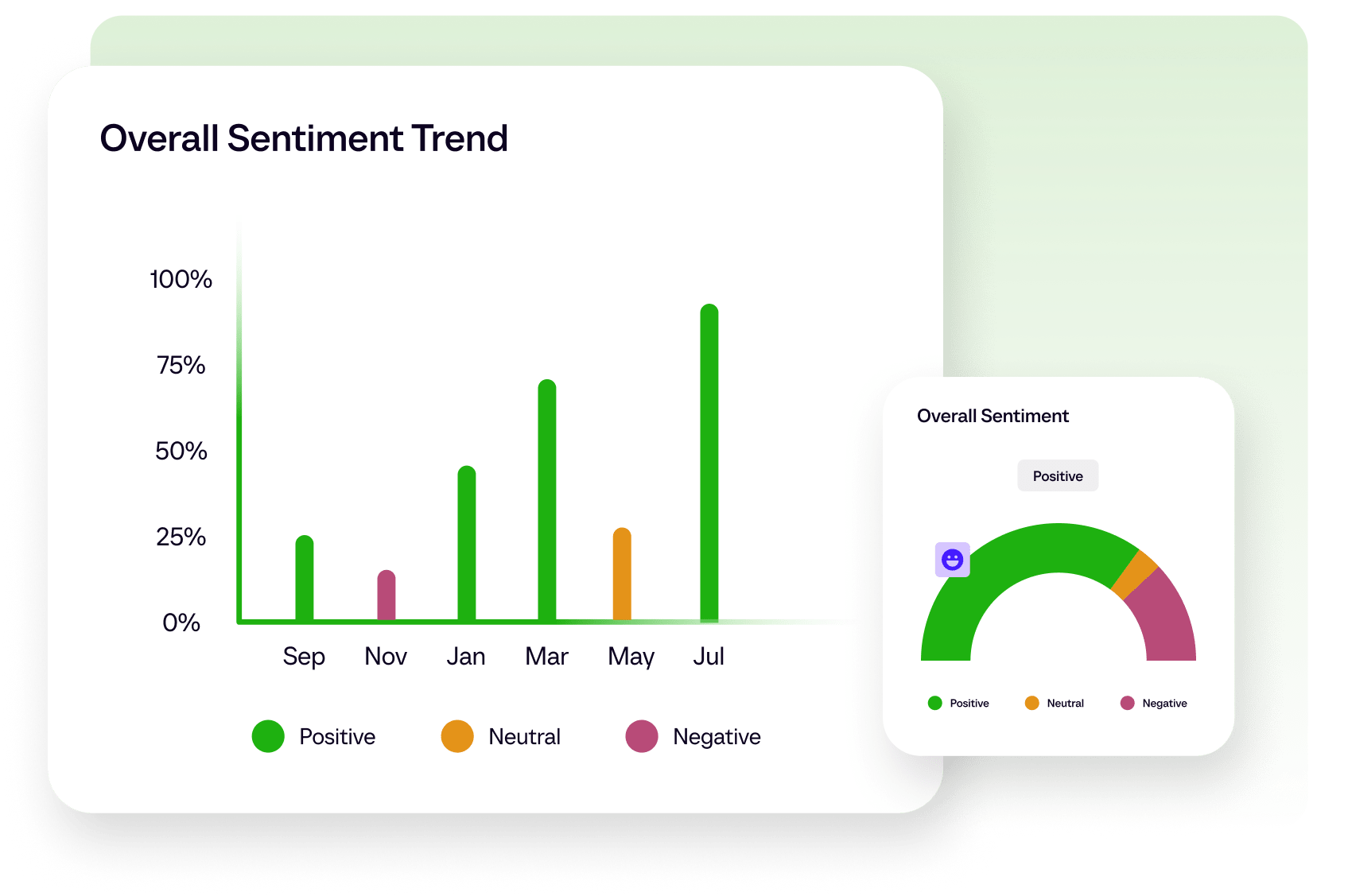
Sentiment dashboards are a useful tool to provide real-time insights into employee mood – ideally broken into clear categories of positive, neutral, and negative. Leaders can quickly sense shifts and act before challenges become crises. Modern platforms are using AI to ensure these insights are surfaced quickly and easily.
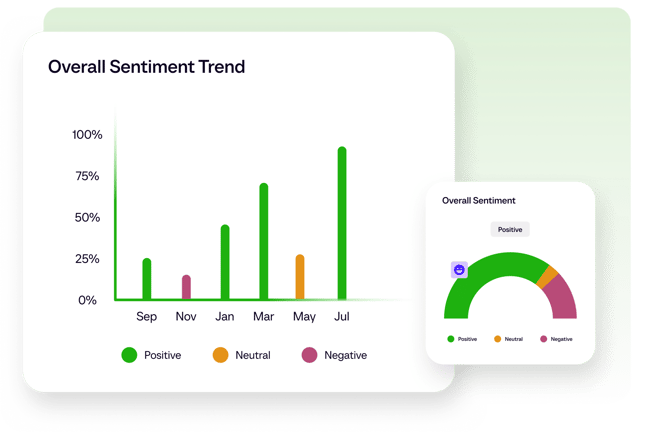
Group-level sentiment breakdown
Going one step further, the ability to gauge sentiment over time and by region or department is especially useful. This targeted view enables tailor-made interventions, which can be more useful than a one-size-fits-all approach.
Turning intranet analytics into actionable insights
Collecting engagement data is only the beginning. Metrics and dashboards are valuable, but their real power comes from translating numbers into clear, targeted strategies that improve the employee experience and drive business outcomes. To do this, organizations should move beyond reporting and toward interpretation and action.
Convene regular analytics reviews with executive stakeholders
Data only creates value when it shapes decision-making. Setting up quarterly or monthly review sessions with senior leaders ensures that intranet engagement metrics are tied to broader organizational objective. These reviews help track progress, celebrate wins, and course-correct where initiatives are falling short.
Communicate findings across the organization
Analytics shouldn’t live in silos. Sharing clear, digestible insights with employees helps create transparency and trust. This can be in the form of dashboards, town hall updates, or team-level reports that spotlight both strengths and opportunities. When employees see that their feedback and behavior patterns are being listened to and acted upon, they’re more likely to be engaged.
Prioritize high-impact interventions
At a time when resource allocation is top of mind for every business leaders, the key is to focus on areas where improvements will make the biggest difference. For example, if the data highlights regions or departments with declining engagement, targeted wellbeing initiatives could address burnout before it escalates. By prioritizing interventions that align with business goals and employee needs, intranet analytics become a powerful lever for cultural and operational improvement.
The use of AI in workplace engagement analytics
Cutting-edge employee engagement analytics increasingly depend on AI, machine learning, and automation. For large enterprise organizations, these bring many benefit.
Firstly, AI-driven sentiment analysis routinely uncovers patterns in stress, burnout, and morale that manual surveys miss. These leads to more proactive support and risk mitigation. Meanwhile, predictive analytics leverage historical engagement data to forecast things like turnover risks.
It also has benefits from a resource standpoint. The use of automation streamlines reporting, freeing up teams for strategic interventions and deeper qualitative engagement work.
AI-powered employee engagement analytics in action
British Airways is one of the world’s largest and most recognized airline brands, with over 40,000 employees, 80% of whom are frontline workers. This includes cabin crew, pilots, engineers, airport workers, contact center agents, and operational and office-based teams.
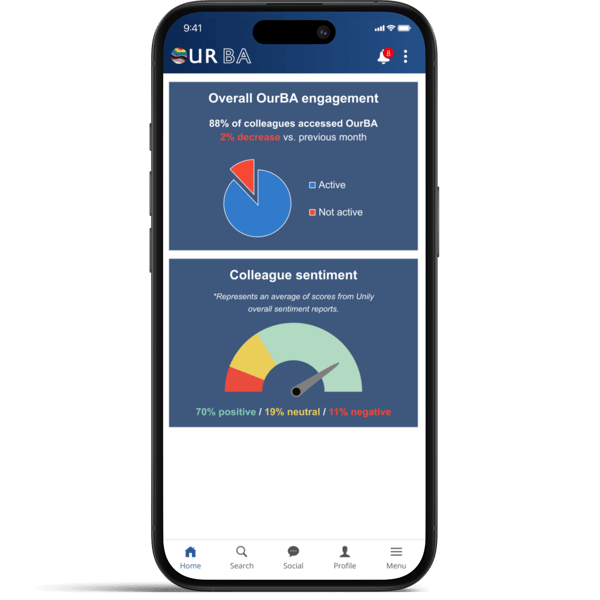
To understand how its diverse workforce felt about its evolving culture, BA is making use of Unily’s AI Reporting. Using natural language processing (NLP), the AI-powered analytics dashboard interprets employee comments and interactions to identify up to eight core emotions, providing real-time insight into perceptions and making it easy to track sentiment over time.
Intuitive dashboards also give BA’s leadership the power to slice data by audience, campaign, or specific content item, meaning even non-technical users can easily uncover insights across campaigns or individual announcements.
The BA communications team shares these insights with senior leadership on a regular basis, and this has redefined how executives approach internal communications. They now have ability to understand how and where their communications is having an impact and define future activity.
“Our CEO now asks to see the sentiment dashboard. We’re no longer guessing how people feel – we can show it.”
Peter Lyons, Head of Internal Communications, British Airways
Download The British Airways Case Study
Implementing intranet analytics with trust and security
Employee engagement analytics mean handling sensitive data at scale, especially for enterprises. Ensuring legal and ethical use of employee data is paramount. We advise HR, IT, and Comms leaders to collaborate on data policy, security, and communication with employees. Leadership should make clear how analytics benefit employees, while reassuring them that privacy rules will be followed.
In general, the rollout of any new analytics tools can often be met with cynicism or resistance. It’s worth having structured change management methodology that focuses on:
- Inclusive onboarding and training for all stakeholders
- Continuous support and iterative improvement cycles
- Open channels for feedback and adaptation
Enterprise leaders following this approach report higher adoption rates and more sustainable engagement transformations.
The enterprise imperative: Building a data-driven EX framework
When you have a culture powered by rich employee engagement analytics, you give yourself a huge advantage in the modern business landscape. A deeper understanding of employee needs leads to meaningful improvements to your organization. Data-driven engagement initiatives empower leaders to make informed decisions. Crucially, it means these decisions align employee goals with broader business objectives. In a world where engagement alone isn’t enough to win, this alignment is critical.
Get started. Get your personalized analytics demo.
