
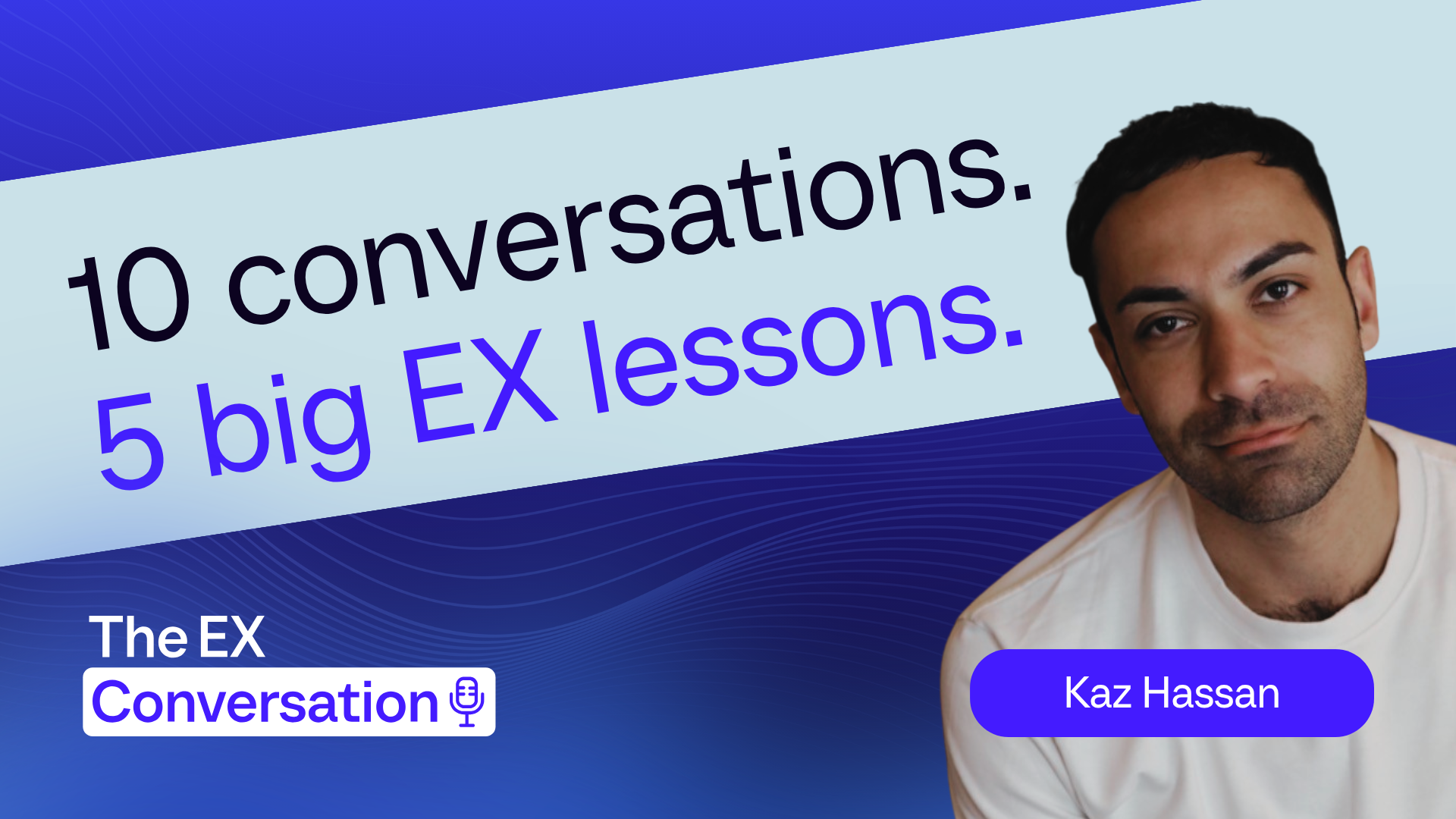
What started as a podcast to explore different perspectives has quickly turned into something more revealing: a reality check for how we design employee experience today, and what needs to change next.
Here are five lessons every EX leader should be acting on right now.
5 lessons from The EX Conversation that leaders can’t ignore
After ten conversations with employee experience, internal communications, and digital workplace leaders from across industries, a few patterns have become impossible to ignore.
What started as a podcast to explore different perspectives has quickly turned into something more revealing: a reality check for how we design employee experience today, and what needs to change next.
Here are five lessons every EX leader should be acting on right now.
1. The best insights don’t come from scripts
One of the biggest surprises for me personally came from hosting the podcast itself.
When I started The EX Conversation, I originally wanted every episode to follow a consistent structure. Same types of questions. Same flow. Same format.
But very quickly, I realized the best insights never came from the script.
“The more I got involved in a conversation, the more I could challenge… and surface more interesting thoughts that people hadn’t prepared.”
The magic happened when conversations became less controlled and more exploratory — when guests were pushed to think differently in the moment rather than deliver prepared answers.
That lesson feels incredibly relevant for EX leaders today.
Too many organizations still approach employee listening through rigid structures: annual surveys, predefined frameworks, templated questions. But employees don’t experience work in neat categories, and the most valuable insight often comes from what leaders weren’t expecting to hear.
The takeaway? Great EX leaders need to think more like great interviewers:
- Stay curious
- Follow the interesting thread
- Challenge assumptions
- Create space for honesty and nuance
Because the best employee insight rarely comes from checking boxes. It comes from conversation.
2. Employee-First Organizations Solve Friction, Not Features
A different theme emerged through conversations with Emma Turner, Chuck Gose, and Laura Kennedy.
And it centered around one thing: truly understanding employee pain points.
Emma Turner made a particularly powerful point about research and discovery. Instead of asking employees what features they wanted from an intranet, she focused on understanding what frustrated them in their day-to-day work.
“Don’t ask employees what features they want… ask what frustrates them in their workday.”
That distinction matters.
The best EX strategies don’t start with technology. They start with friction.
Chuck Gose reinforced this idea from an internal communications perspective, reflecting on how organizations often overinvest in external communications while underinvesting internally — despite employees being one of the most important audiences any organization has.
Meanwhile, Laura Kennedy highlighted the role frontline managers play in shaping everyday employee experience. Communication capability, she argued, shouldn’t just be introduced once someone becomes a manager. It should be continuously developed across the workforce.
Together, these conversations point to a major shift for HR, EX, and Internal Comms teams:
- Stop designing around organizational outputs
- Start designing around employee obstacles
- Focus less on features and more on reducing friction
Because often, improving employee experience isn’t about adding more.
It’s about removing what’s getting in the way.
3. AI success needs a big EX Reset
If there’s one theme that came through almost universally, it’s that AI demands a complete mindset shift.
Not optimization. Not enhancement. Transformation.
Hattie Roche was one of the first guests to frame it this way, arguing that many organizations have created what she described as a “Frankenstein” version of employee experience — layered with disconnected systems, processes, and workarounds that no longer truly serve employees.
“We have to throw out the old rulebook.”
That same idea surfaced again in my conversation with Dan Lewis, who spoke about the opportunity AI creates for internal communicators to rethink outcomes entirely.
For teams that have historically lacked resources, budget, or scale, AI represents a chance to fundamentally redesign how communication is delivered — faster, more effectively, and with far greater personalization.
Then Will Saville, Co-Founder of Unily added another critical layer: the difference between AI-native experiences and platforms that simply bolt AI features onto existing technology.
That distinction is going to matter enormously for EX and digital workplace leaders over the next few years.
Because organizations now face a choice:
- Incrementally improve broken experiences
- Or completely re-architect them with AI at the core
The leaders who succeed in this next era won’t be the ones experimenting with isolated AI use cases.
They’ll be the ones redesigning employee experience from the ground up.
4. The Digital Front Door Is Back, And This Time It Mean Business
For years, organizations talked about creating a “digital front door” for employees.But the reality rarely lived up to the promise. That’s now changing, largely because AI has finally made it achievable
Susie Robinson explained how the concept has returned stronger than ever because modern intranet platforms can now integrate systems, simplify workflows, and transform information into action far more effectively than before.
“AI allows intranet platforms to deliver on the digital front door in a way that it never could before.”
That perspective was reinforced in my conversation with Kim England, who spoke about simplifying the workday through connected employee experiences and technologies like Unily Glass.
What stood out most in Kim’s story was her evolution from Internal Comms into Employee Experience — because it reflects what many organizations are now realizing:
EX can’t sit in silos anymore.
The organizations making progress are connecting:
- HR
- IT
- Internal Comms
- Digital Workplace
- Operations
And they’re using technology to simplify work across all of them.
The digital front door isn’t just an intranet strategy anymore. It’s becoming the operating system for employee experience.
5. In an AI Era, Human Confidence Is a Competitive Advantage
For all the conversations around AI and technology, one of the most important lessons from the podcast had nothing to do with systems at all.
It was about people. Specifically, confidence.
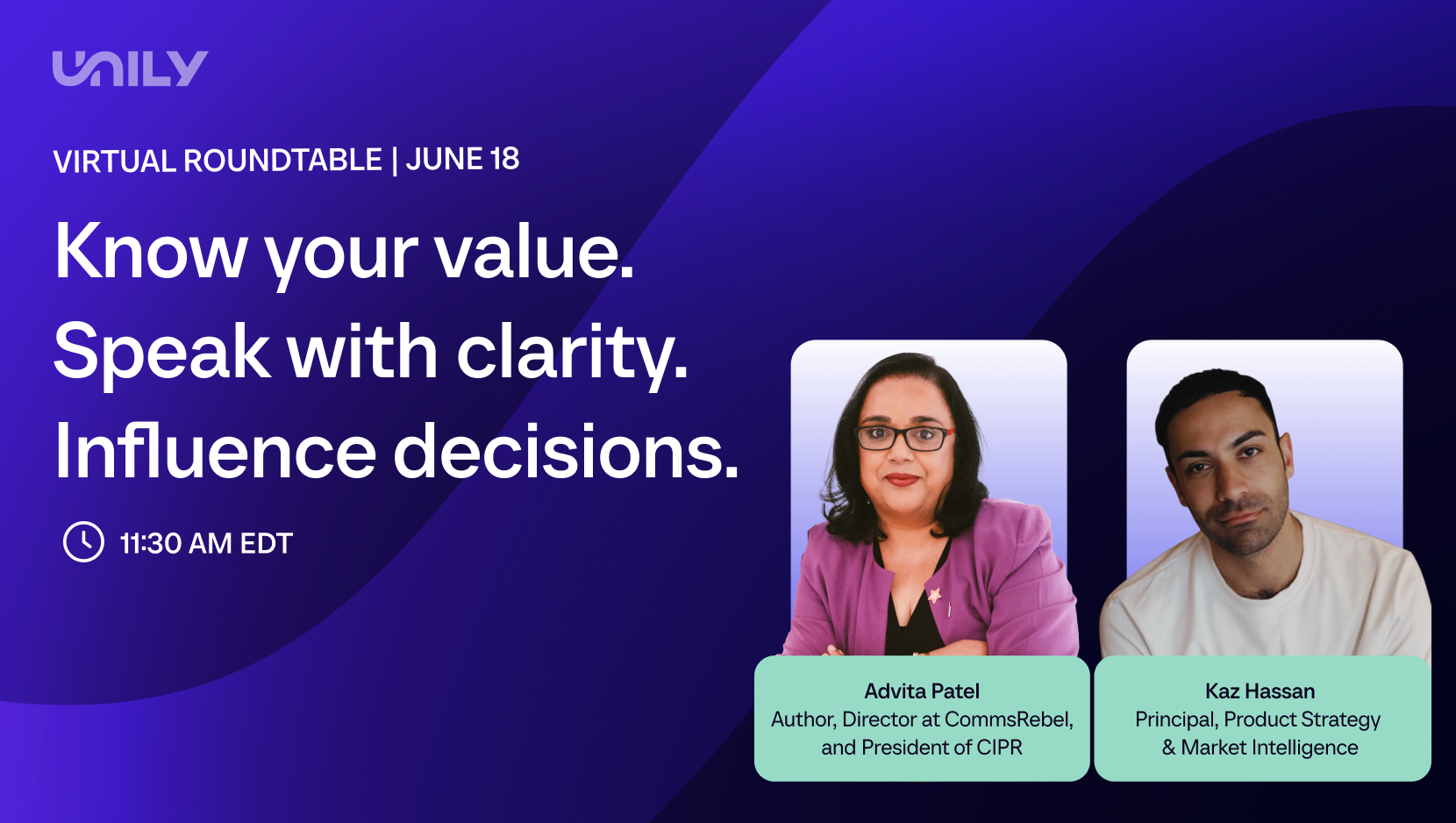
Advita Patel made a powerful point about how many internal communicators already are experts in what they do — but often struggle to confidently own that expertise inside organizations where everyone has an opinion on communication.
“We are the experts… and we should never forget that.”
That conversation immediately brought me back to my very first episode with Jenny Shires.
When I asked whether she was more gut instinct or data-driven, I expected her to say data.
Instead, she said instinct. Not because data doesn’t matter — but because experience matters too.
Years of working across organizations, cultures, and employee challenges build intuition. And in an era where organizations are increasingly looking to AI for answers, human judgment, empathy, and instinct become even more valuable.
The best EX leaders won’t ignore data. But they also won’t lose confidence in their own expertise.
Because technology might shape the future of work — but people will still shape the experience of it.
Final Thought: This Is a Huge Opportunity for EX Leaders
Across all 10 episodes, one thing keeps standing out: We are entering a completely new era of employee experience.
Employees expect more. Technology can deliver more. But many organizations are still thinking too small.
The opportunity for HR, EX, Internal Comms, and Digital Workplace leaders right now isn’t simply to optimize what already exists. It’s to fundamentally rethink how organizations communicate, support, and enable employees altogether.
“We need a mindset shift… if we really want to level up our organizations and deliver for employees.”
And the leaders willing to embrace that shift now will define what great employee experience looks like next.
🎧 Catch up on the conversation
If you haven’t already, now’s the time to dive in. All 10 episodes of The EX Conversation are live—packed with insights from employee experience, internal communications, and digital workplace leaders.
Explore the full series, hear these perspectives firsthand, and see how other organizations are rethinking EX for the AI era.
👉 Start listening now and join the conversation.
Get started. Get your personalized demo.