
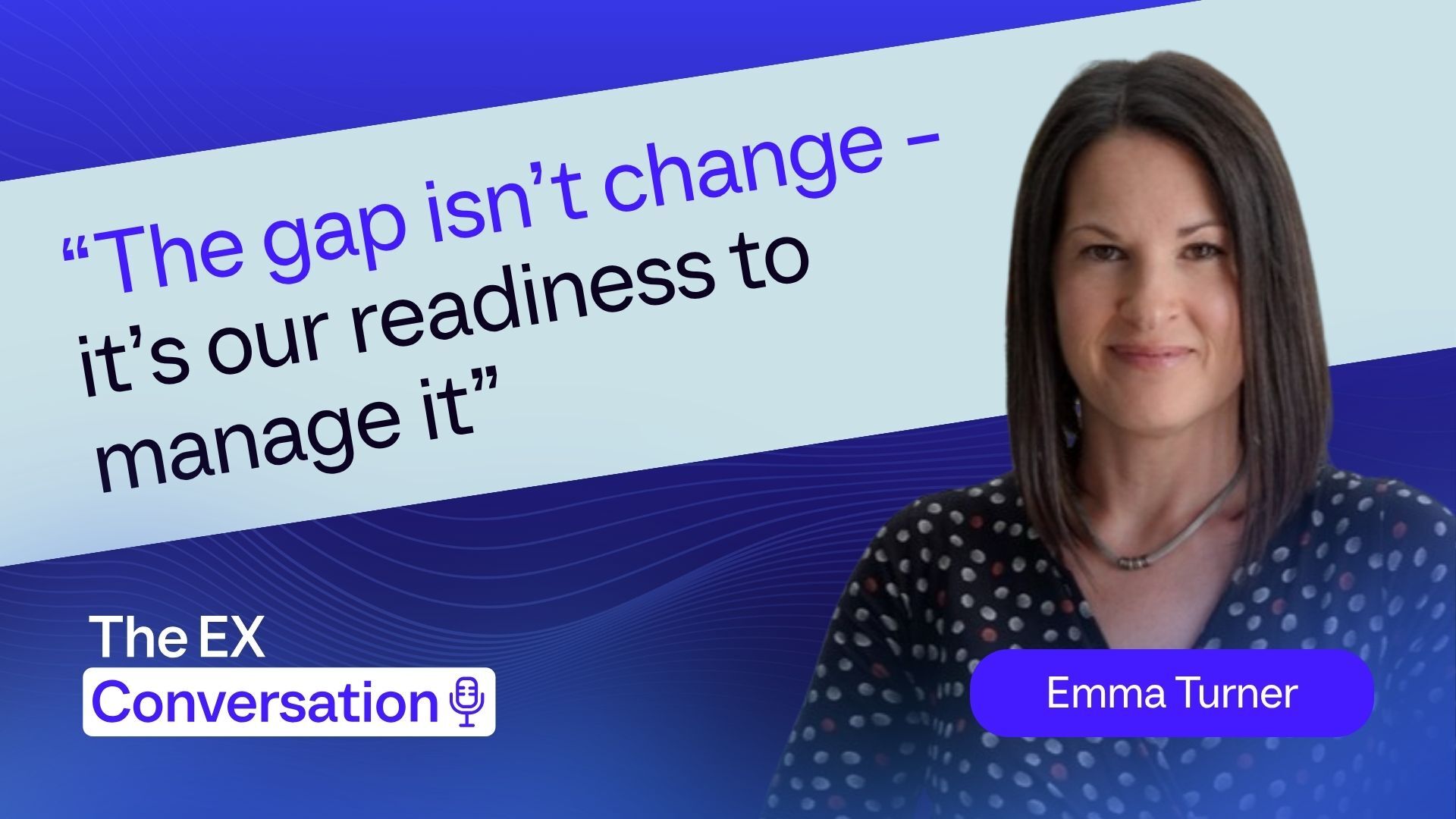
In a recent episode of The EX Conversation, Emma Turner, an experienced internal communications and change leader with a strong background in technology-led transformation, shared a refreshingly grounded view of what works in practice. Her perspective is not about frameworks or silver bullets. It is about how things really play out inside organizations.
Here are three takeaways that stand out for EX leaders trying to make progress in imperfect conditions.
1. Most employees don’t want more communication. They want less, but better
One of the most common disconnects in EX is between what project teams want to say and what employees actually need to hear.
As Emma puts it:
“People on the front line, they don’t really care. They just want to know the minimum amount of information that they need to know to use the thing and then get on with their day.”
For teams running change programs, especially technology rollouts, this can be hard to accept. The work is complex, the effort is significant, and there is a natural desire to bring people along on the journey. But most employees are not invested in the process. They are focused on getting their job done.
Emma’s approach is to act as a translation layer between technical teams and employees. That means stripping away complexity, managing expectations, and focusing only on what people need in the moment.
This is not about dumbing things down. It is about respecting people’s time and cognitive load. In a world of constant change, clarity is more valuable than completeness.
2. Managers are the missing link in change, and we still underinvest in them
EX leaders have known for years that managers play a critical role in shaping employee experience. But in practice, many organizations still expect them to absorb and deliver change without enough support.
Emma highlights the reality:
“You get promoted one day because you’re good at your job… and suddenly you’re expected to know how to support teams of people… through huge amounts of change and communicate effectively.”
For employees, the manager is the experience. They are the person people turn to for clarity, reassurance, and answers. When managers are not equipped, the entire experience breaks down.
What stands out in Emma’s thinking is the emphasis on starting small and involving managers directly in shaping solutions. Rather than rolling out large, top-down programs, she suggests working with a small group of managers, understanding their real challenges, and testing approaches before scaling.
This is less about pushing more messaging through managers and more about building their capability. Coaching, practical support, and co-creation matter more than another toolkit.
It is a slower path, but a more realistic one.
Episode 6: Making change make sense with Emma Turner

3. Discovery beats assumptions, every time
Many EX initiatives start with a predefined problem. Often that problem is based on assumptions, past experience, or leadership opinion.
Emma is clear about the risk:
“We often make assumptions on what we think we know… and assumptions can be incredibly dangerous.”
Her approach to discovery is simple but powerful. Do not start with solutions or features. Start by understanding how work actually gets done and where friction exists.
That means asking questions like:
- How easy is it to find what you need to do your job?
- Where do things slow you down?
- What makes your day harder than it should be?
From there, patterns emerge. Common frustrations become visible. And importantly, solutions can be tied back to real problems employees recognize.
Emma also points out that the biggest issues are rarely about engagement with corporate content. They are about access to tools and information. If people cannot do their jobs efficiently, nothing else matters.
When you solve those problems, you earn the right to engage people in broader experiences.
Why this matters
Taken together, Emma’s perspective is a useful reset for how EX leaders approach their work. It shifts the focus away from doing more and toward doing what actually helps people in the flow of their day. Instead of overloading employees with information, it encourages clarity and restraint. Instead of expecting managers to carry change unsupported, it highlights the need to build their capability in practical ways. And instead of jumping to solutions, it reinforces the value of slowing down to truly understand the problem first.
For leaders operating in constant change, this way of thinking makes it easier to make confident decisions, even without perfect data, and to focus effort where it will have the most impact right now.
Want the full conversation?
Emma Turner’s perspective is a useful reminder that good employee experience work is often less about adding more and more about focusing on what actually helps people do their jobs.
If this resonated, it is worth going deeper into the full conversation. There are additional nuances around technology, search, and the evolving expectations employees have of their digital workplace that are not fully explored here.
Get started. Get your personalized demo.