

Build a digital workplace that works better
The organizations best positioned for the future will not simply give employees more technology.
They will create digital workplaces where people can find information they trust, understand what matters, get work done with less friction, and remain connected as the business grows.
Download The State of the Digital Workplace Experience to discover what separates a good digital workplace from the rest.
Complete the form to receive the full research report from Unily and Gallup.
Access the insights. Move work forward.
What separates a good digital workplace from the rest?
New research from Unily and Gallup reveals a significant gap between the workplace technology organizations provide and the experience employees actually have.
Based on a survey of 2,305 U.S. workers, the report examines how Digital Workplace Experience relates to workforce performance, organizational complexity, and readiness for AI.
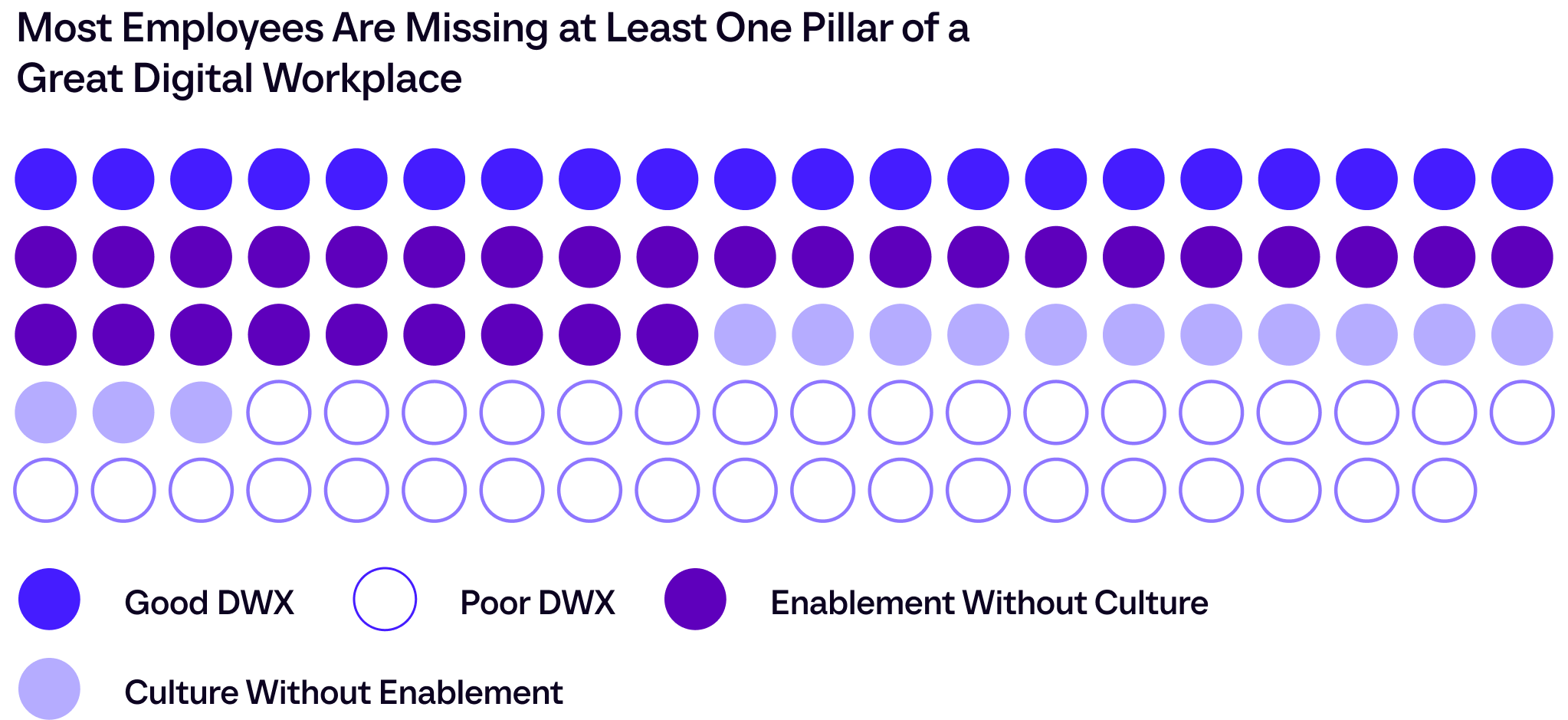
Only 1 in 5 employees has a good Digital Workplace Experience
A good Digital Workplace Experience combines two essential elements:
- Digital Enablement: Employees can find, access, and use the tools and information they need without unnecessary friction.
- Digital Culture: The digital environment helps employees understand the organization, connect with colleagues, learn, and feel recognized.
Only 20% of employees experience both.
Why Digital Workplace Experience matters
This is bigger than technology
Digital Workplace Experience is not simply an IT issue. It is part of the foundation for enterprise performance.
Employees with good DWX report materially different outcomes from those with poor DWX:
3.1×
More likely to be engaged
5.5×
More likely to strongly recommend their organization as a place to work
11% vs. 38%
Experience frequent burnout
1.6×
More likely to intend to stay
The research does not establish causation, but the consistency of the findings reveals a clear relationship between Digital Workplace Experience and the workforce conditions that underpin enterprise performance.
Key finding one
Technology that works is only half the answer
Organizations often focus on whether employees can access the tools and information they need. But the research suggests that the culture created through those systems may matter even more.
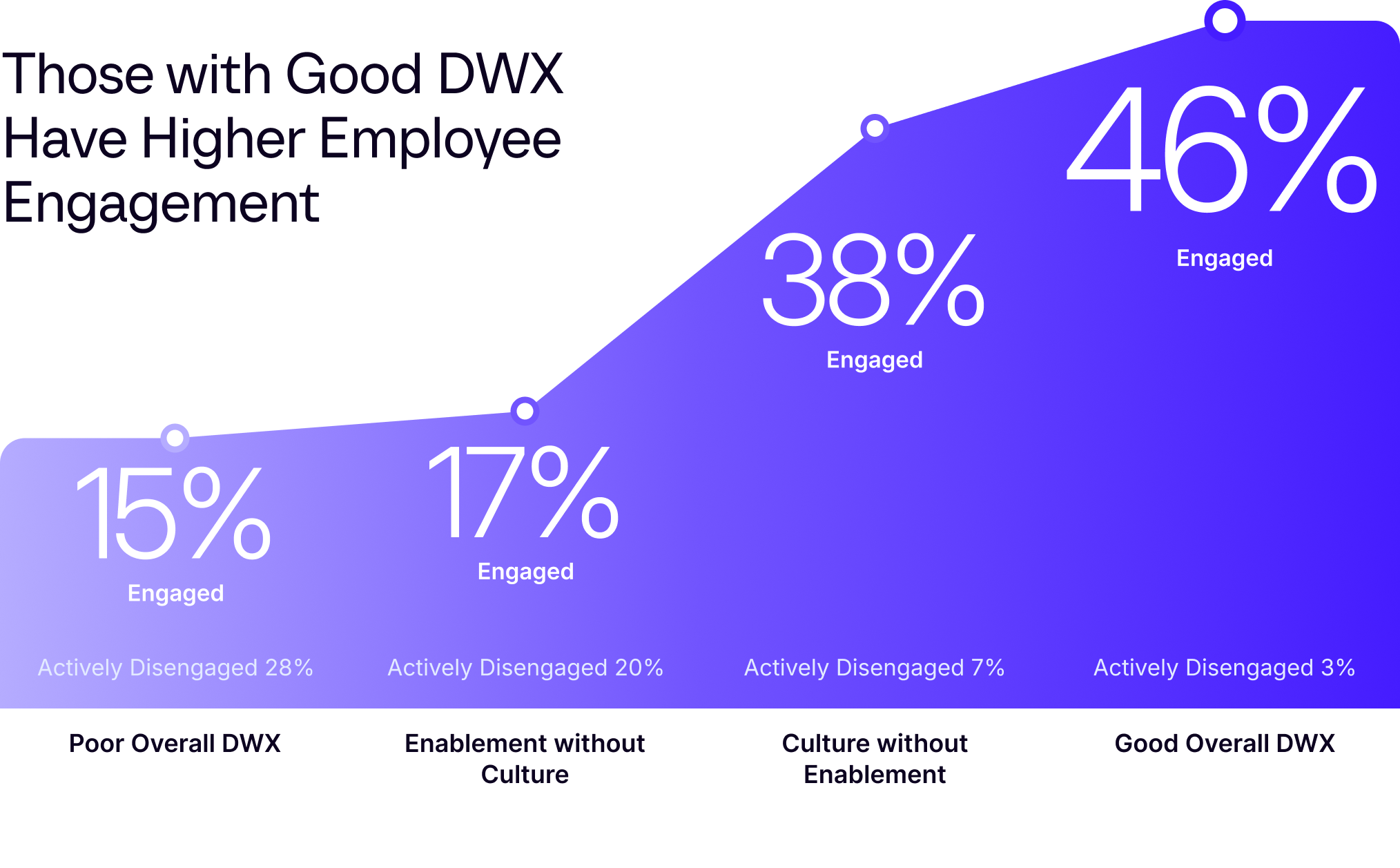
Employees with strong Digital Culture but weak Digital Enablement report better outcomes than those with strong Enablement but weak Culture:
- 38% vs. 17% are engaged
- 34% vs. 17% strongly recommend their employer
- 29% vs. 14% strongly agree their organization cares about their wellbeing
- 21% vs. 29% experience frequent burnout
Employees with both strong Enablement and strong Culture report the best outcomes overall. But the message is clear: usable technology alone does not create a high-performing digital workplace.
The digital environment must also keep people informed, connected, recognized, and able to grow.
Key finding two
Easy to access does not mean easy to trust
Organizations may have made workplace information more available without making it consistently reliable.
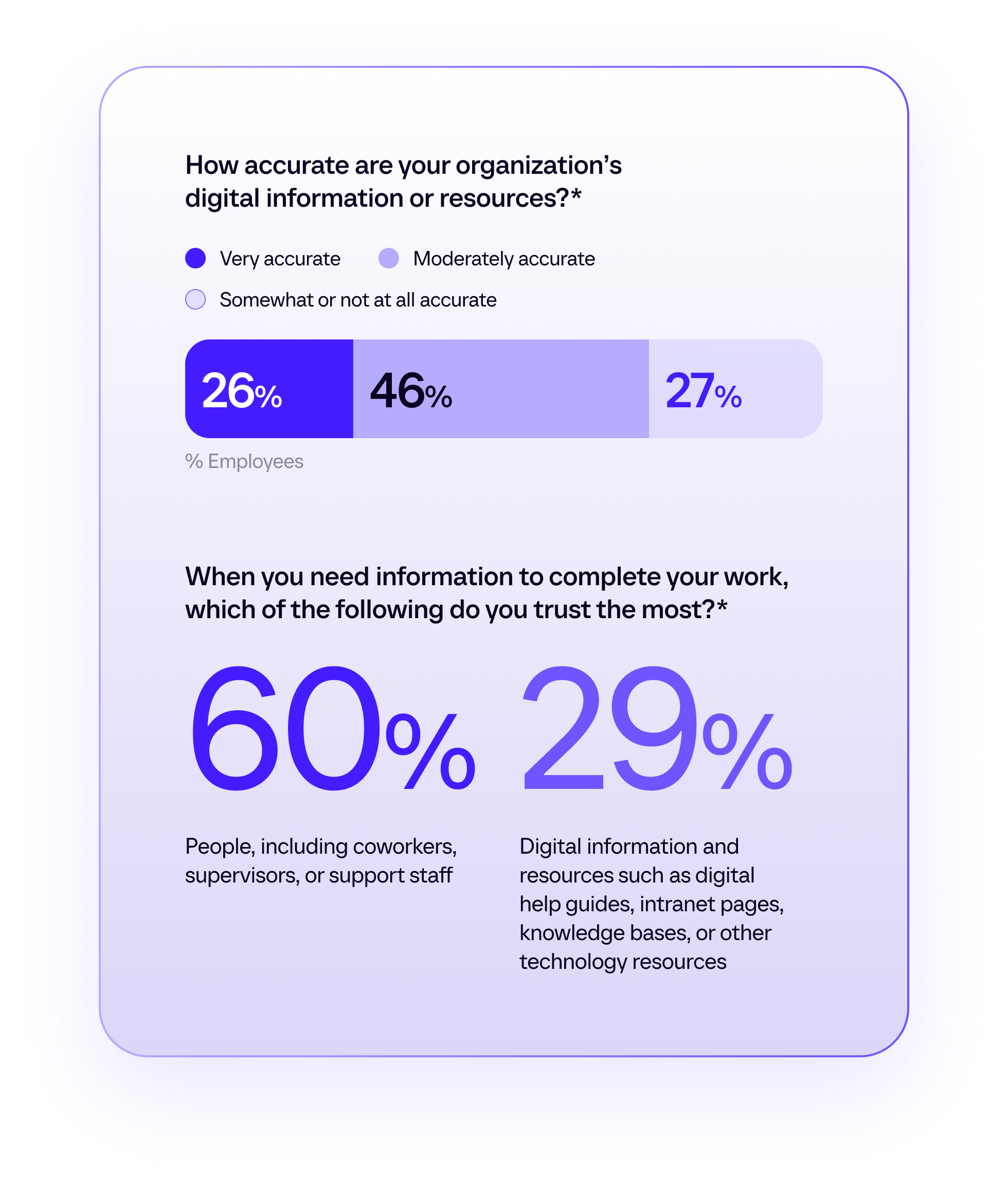
While 57% of employees say workplace information is relatively easy to access, only 26% describe their organization’s digital information as very accurate.
Among employees who use both people and digital information or resources to get work done:
60% trust people most
29% trust digital information and resources most
For enterprise leaders, this is more than a findability problem. It raises important questions about knowledge governance, organizational clarity, and whether employees can confidently turn information into action.
Key finding three
Complexity grows faster than the employee experience can keep up
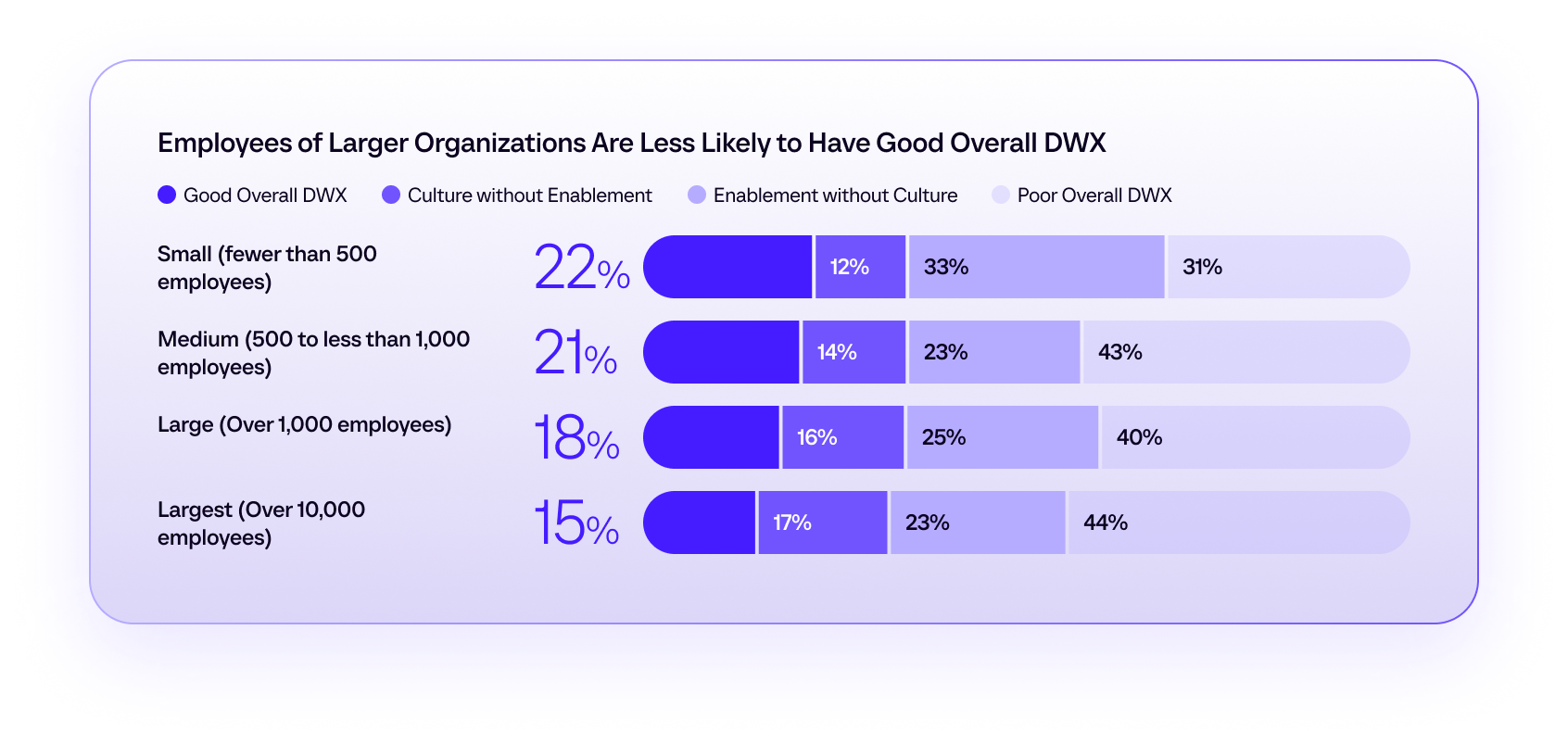
Digital Workplace Experience becomes harder to deliver as organizations increase in size.
The proportion of employees with good DWX falls from:
22%
At organizations with fewer than 500 employees
15%
At organizations with 10,000 or more employees
Larger and more distributed organizations also report greater tool-switching, communication pressure, and difficulty creating a sense of connection.
The research reveals how information fragmentation contributes to that complexity:
- 33% frequently switch tools when information is held in one location
- 62% do so when information is spread across a few locations
- 78% do so when information is spread across many locations
Complexity may be an unavoidable part of enterprise scale. A poor Digital Workplace Experience is not.
Key finding four
AI readiness starts with the workplace employees already have
Enterprise AI is being introduced into digital environments that employees may already find fragmented, difficult to navigate, or hard to trust.
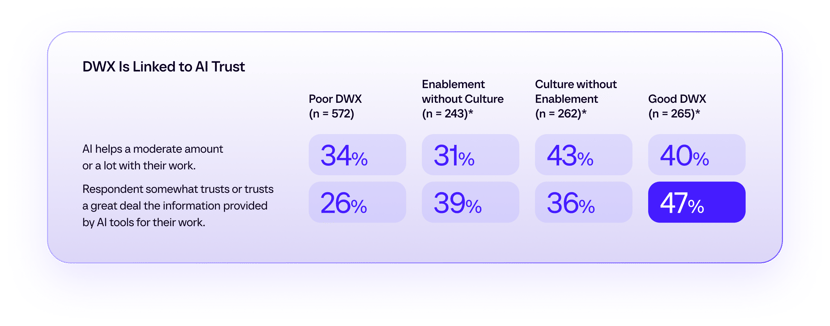
Among employees who use AI:
47%
of those with good DWX trust AI-provided information
26%
of those with poor DWX trust AI-provided information
At the same time, 72% of employees had not participated in employer-provided AI training or learning activities during the previous six months.
AI cannot resolve unclear, fragmented, or untrusted information by itself. Organizations need the right foundations, including trusted enterprise knowledge, effective workplace systems, strong governance, and a culture that helps employees use technology confidently.
What you'll get
You will learn...
Download the report to explore:
- The eight measures that define Digital Workplace Experience
- Why good DWX remains uncommon despite sustained technology investment
- How DWX relates to engagement, burnout, advocacy, and retention
- Why Digital Culture may matter more than functional technology alone
- How information fragmentation contributes to tool-switching
- Why DWX becomes harder to deliver as organizations grow
- How distributed work increases reliance on the digital workplace
- The relationship between existing DWX and employees’ trust in AI
- What distinguishes employees with strong Digital Workplace Experiences
Who it's for
Essential insight for enterprise leaders
The report provides relevant evidence for:
- CEOs and business leaders connecting workplace investment to enterprise performance
- CIOs and IT leaders managing complexity, information fragmentation, and AI readiness
- CHROs and people leaders focused on engagement, retention, and workforce effectiveness
- Internal communications leaders building clarity, connection, and trust at scale
- Digital workplace leaders creating experiences that work across systems, roles, and locations